
Bridgewater's Development Problem
Bridgewater has spent decades trying to attract development downtown while its tax base stays overwhelmingly residential — and now the town is legally required to zone for more housing at the exact moment it doesn’t have enough clean water to hook new buildings up. Here’s the full picture, with sources.
A Downtown Left to Rot
Bridgewater doesn’t have a shortage of development interest — it has a shortage of follow-through. Downtown parcels have sat vacant for 20 years while the town’s tax strategy failed to attract the commercial growth it was designed for, leaving homeowners to shoulder costs that a stronger commercial base could help offset. Meanwhile, the town committed to a state housing mandate without the water infrastructure to back it up, and is now boxed in on both sides — unable to fully capitalize on redevelopment opportunities like Broad Street, and legally required to plan for housing growth it can’t yet physically support.
Residents deserve town leadership that aligns infrastructure investment with development policy, instead of reacting to state deadlines and emergencies one at a time.
Read on to learn more about the major problems with our community’s development…
But first...
What is the MBTA Communities Act?
In a nutshell, the MBTA Communities Act (Section 3A of the Massachusetts Zoning Act) is a 2021 state law that requires 177 cities and towns in the MBTA transit region to update their zoning to allow multi-family housing (3+ units) “by-right” in designated districts, without the need for special permits. [1, 2]
The Scale of the Issue
In February 2026, the Town Council took up Order O-FY26-051, a measure to formally declare Bridgewater’s downtown corridor a blighted area — a designation that would make the town eligible for receivership funds and grants to force vacant or deteriorating properties back into productive use. That the town needed to formally declare its own Main Street “blighted” in 2026 says a lot about how long these problems have gone unaddressed.
Decades of Neglect in Our Downtown
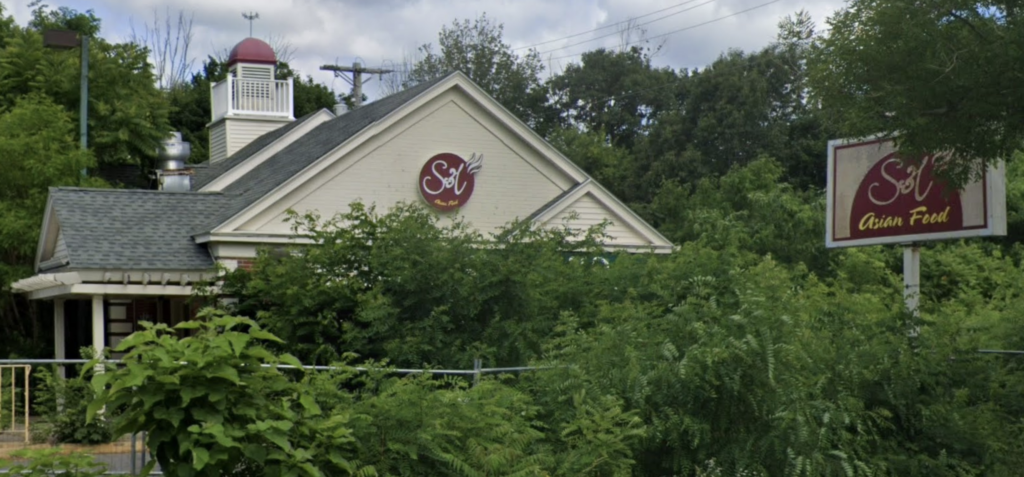
The former bowling alley and Friendly’s site at 70-86 Broad Street sat vacant and deteriorating for roughly 20 years before a developer finally brought forward a redevelopment proposal in 2025. As the project’s own partner told the Town Council, nobody had “lifted a finger” on the site in two decades of neglect. This is not an isolated case — the town’s own “Vision to Reality” planning process identified six separate underutilized downtown sites, on Broad, Summer, Spring, and Hale Streets, that have sat undeveloped for years.
A Flat Tax Rate That Hasn't Delivered
For years, Bridgewater has kept a single, unitary tax rate for residential and commercial property — currently $12.03 per $1,000 of value for both — specifically on the theory that a low, equal rate would entice businesses to locate here. Town Councilor Fred Chase has said plainly that this strategy has largely failed: with the notable exception of the Elm Street area, “the needed development has never been realized.” Because the town has almost no commercial tax base to shift costs onto, homeowners are left carrying most of the load when budgets — for schools, water infrastructure, or anything else — go up.
The MBTA Communities Act: A Housing Mandate That Landed Mid-Crisis
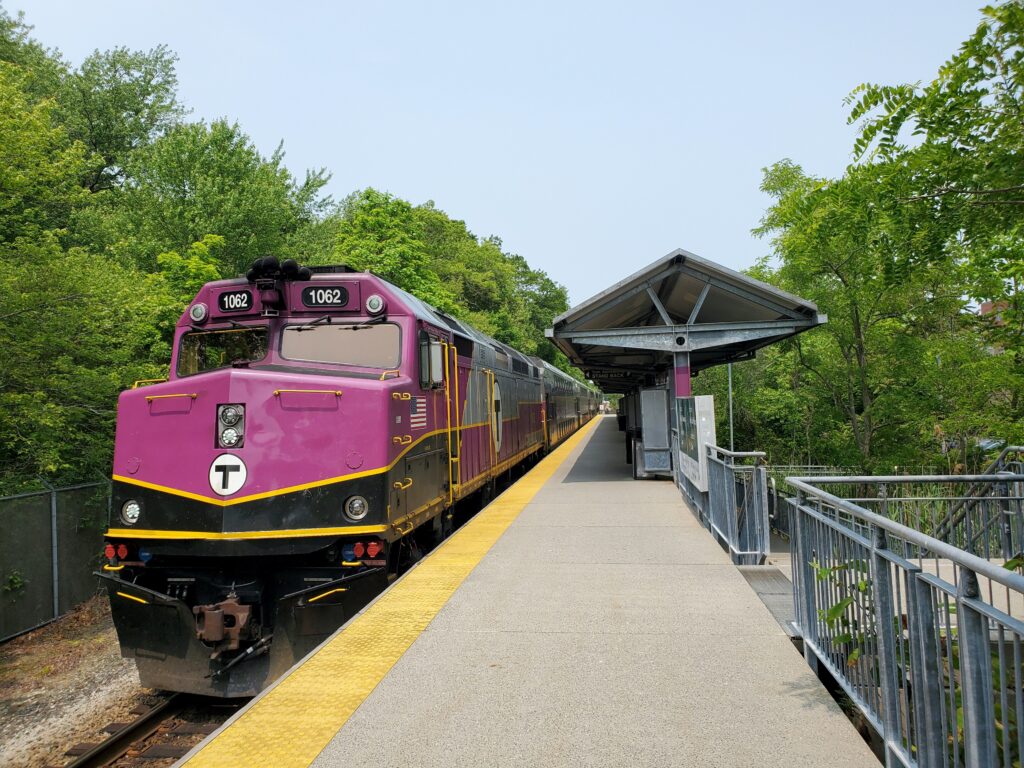
Separately from downtown redevelopment, state law is now forcing Bridgewater’s hand. The MBTA Communities Act requires municipalities like Bridgewater to zone at least one district for multifamily housing as-of-right near transit, or risk losing discretionary state grant funding and facing legal action from the Attorney General’s office. As of January 2026, Bridgewater is listed among a small group of “conditionally compliant” communities.
The timing could not have been worse. Just days after MassDEP declared Bridgewater’s water supply emergency in December 2025, the Town Council held a contested 7-2 vote to adopt the final zoning amendment needed to stay compliant with the MBTA law and protect the town’s grant eligibility. Opponents on the Council argued it was reckless to commit to more housing capacity during an active public health water crisis.
The Contradiction: Zoned for Growth, Banned From Connecting to It
Here’s the collision residents should understand: at the very same December 16, 2025 meeting where the Council voted for MBTA compliance, town officials also confirmed that no new, non-approved development projects would be authorized to connect to the municipal water system for the duration of the emergency. MassDEP’s own March 2026 correspondence confirms this restriction is still in place. In other words, Bridgewater is now legally zoned to allow more multifamily housing than it can currently supply with safe water — a direct consequence of the same decade of deferred infrastructure investment driving the water crisis itself.
What Real Redevelopment Could Be Worth: The Broad Street Case Study
The numbers behind the Broad Street proposal show exactly what’s being left on the table. The vacant property currently generates about $14,000 a year in property tax revenue. Under the proposed mixed-use redevelopment — 77 residential units plus 6,300 square feet of commercial and retail space — the site is projected to generate roughly $105,000 in its first year and over $320,000 a year once a 15-year tax increment financing (TIF) agreement expires. That’s more than a 20-fold increase in tax revenue from a single downtown parcel. Multiply that potential across the six identified underused sites, and it’s clear how much revenue the town’s stalled downtown represents.
Sources: Boston.com; South Shore News; Bridgewater-Raynham News (Substack); Massachusetts Attorney General’s Office; MassDEP; Town of Bridgewater (Assessing Department, Vision to Reality planning documents, Town Council orders). Residents are encouraged to review Town Council Order O-FY26-051, the December 16, 2025 Town Council minutes, and the MBTA Communities Act compliance filings directly at bridgewaterma.gov before publishing.